GPSR Labelling Requirements: What to Print and On What
Since 13 December 2024 almost every consumer product sold in the EU has to carry identification and contact data under the General Product Safety Regulation (EU) 2023/988. Most companies solved the legal half of that, took a checklist from a lawyer, and then printed the result on office sticker sheets. A year later the adhesive has lifted at the corners, the text has faded to grey, and there is a product on a shelf that nobody can trace back to a batch. GPSR labelling requirements are a printing and materials problem as much as a legal one, and that is the half almost nobody writes about.
This guide covers what the label has to say, what it has to be printed on so it is still legible in three years, and which printer, ribbon and label stock actually produce it.
Which printer and label do you need?
| Your situation | Order this |
|---|---|
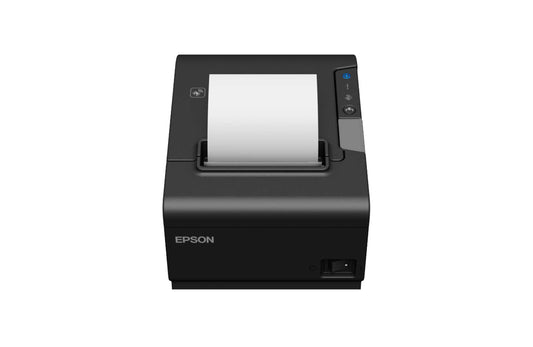
| Indoor goods, sold and consumed within about a year, low volume | A direct thermal desktop printer on paper labels. A desktop label printer in direct thermal form is enough. |
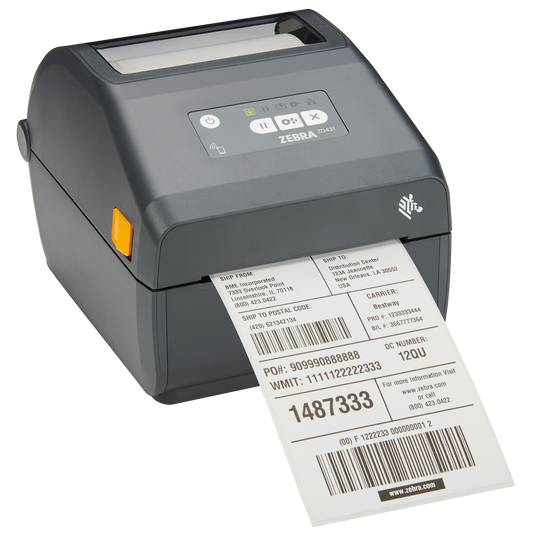
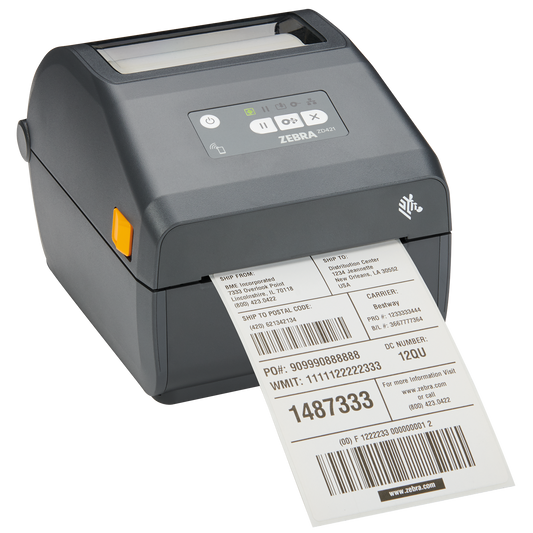
| Retail products with a shelf life of one to three years | Zebra ZD421t plus a wax/resin ribbon (Zebra 3200) on synthetic film labels |
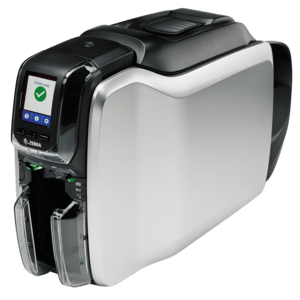
| Damp, outdoor, solvent or friction exposure | Zebra ZD421t or Citizen CL-S521 with Zebra 5095 resin ribbon on polypropylene or polyester |
| Small items where the block will not fit at 203 dpi | A 300 dpi thermal transfer printer and small-format film labels |
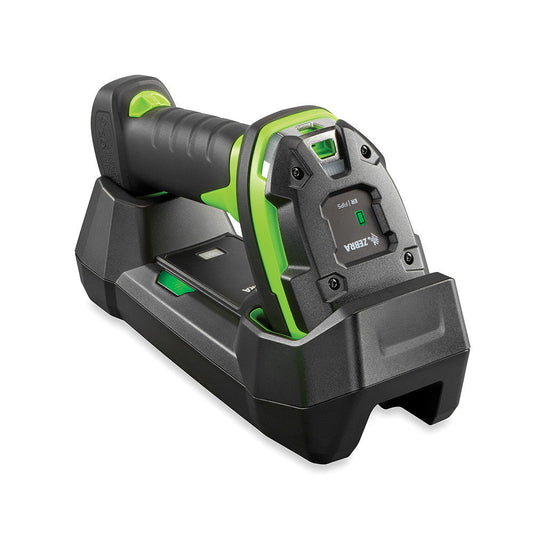
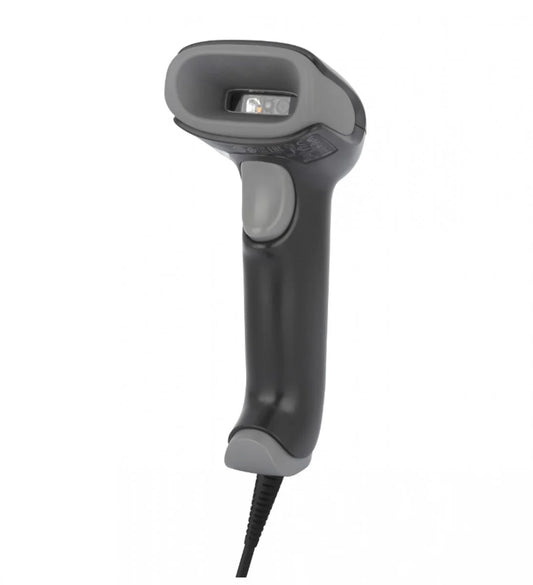
| You need to prove your own labels scan | A 2D imager such as the Honeywell Xenon 1952g |
What do the GPSR labelling requirements actually put on the label?
Three blocks of information, and it is worth separating them because they come from different articles and land on different parties.
An identification element. Article 9 requires the manufacturer to ensure the product bears a type, batch or serial number, or another element that lets the product be identified. It has to be easily visible and legible. Where the size or nature of the product does not allow it, the same information may go on the packaging or in an accompanying document.
Manufacturer contact details. The manufacturer's name, registered trade name or registered trade mark, a postal address and an electronic address. An electronic address means a working email or a web form, not a marketing homepage.
Importer contact details. Where the manufacturer sits outside the EU, Article 11 puts the same set of details on the importer: name or trade mark, postal address, electronic address. The importer's markings must not cover the manufacturer's markings, which in practice means either one combined label or two labels with space planned for both.
Alongside that, warnings and safety information have to be in a language that consumers in the country of sale understand easily, and online listings have to repeat the manufacturer and responsible person details, a picture, the type and any warnings. A seven-market seller therefore needs either seven language variants of the warning text or one multilingual label, which is the single biggest driver of label size in practice. The exact article wording is on EUR-Lex and is worth reading with your legal adviser rather than taking from any supplier, including us.
What GPSR does not require is a barcode. Nothing in the regulation forces a 1D or 2D symbol onto the label. Plenty of companies add a GS1 DataMatrix anyway, because it carries the batch and serial in a form a market surveillance officer or a returns desk can read in one scan instead of typing.
Why does a direct thermal label fail a GPSR audit?
Direct thermal paper has no ribbon. The printhead darkens a heat-sensitive coating, and that coating goes on reacting after printing. Heat, sunlight, friction and contact with plasticisers in PVC or with solvents all darken or bleach it. In a warm warehouse or a sunlit shop window a direct thermal label can become hard to read inside six months. The regulation gives no durability figure, but it does require the marking to be visible and legible, and market surveillance can arrive years after the product was placed on the market.
Thermal transfer is the alternative: a ribbon melts pigment onto the label, and the ribbon chemistry decides how tough the result is.
| Ribbon type | Typical Zebra grade | Sticks to | Survives | Use it for |
|---|---|---|---|---|
| Wax | 2300 | Paper | Dry handling, light abrasion | Cartons and internal labels, not product marking |
| Wax/resin | 3200 | Paper and coated film | Moisture, moderate rubbing, some oils | Most retail GPSR labels |
| Resin | 5095 | Polypropylene, polyester | Solvents, heat, chemicals, outdoor exposure | Tools, chemicals, outdoor and industrial goods |
Ribbon and label have to be matched as a pair. Resin ribbon on paper smears, because the resin never keys into the fibre. Wax on polypropylene scratches off with a thumbnail. If you change label material, change the ribbon with it, and print one label and rub it hard before you commit to 10,000.
The honest counter-case: if you sell an indoor product that is used up within a year and you ship a few hundred units, direct thermal on paper is fine and cheaper, and nobody will ever be able to fault it. The build matters when the product has a long life, goes outdoors, or is worth recalling.
How small can a GPSR label be?
The block is usually six to eight lines: product name, type or model, batch number, manufacturer name, manufacturer address, email, importer name, importer address. Add multilingual warning text and it grows fast.
Print resolution decides the floor. At 203 dpi one dot measures 0.125 mm, so the smallest text that stays readable after a year of handling is around 6 pt. At 300 dpi one dot is 0.085 mm and 4 pt text still resolves. That is the difference between needing a 50 x 30 mm label and fitting the same block on 25 x 15 mm.
If you add a GS1 DataMatrix, the module size is the constraint. A 203 dpi printer can only place modules in 0.125 mm steps, so the smallest safe module is two dots, 0.25 mm. A 300 dpi printer gets to a similar module in three dots with far cleaner edges. For anything smaller than a matchbox, buy 300 dpi and stop fighting the hardware.
What changes after 2026?
GPSR is not the only rule pushing data onto labels. Three deadlines are worth putting in a calendar now, because each one changes what a label has to carry rather than just what a form has to say.
| Date | Rule | Effect on your labels |
|---|---|---|
| In force since 13 December 2024 | GPSR (EU) 2023/988 | Identification element plus manufacturer and importer contact details on the product or its packaging |
| 12 August 2026 | PPWR (EU) 2025/40 starts to apply | Packaging rules begin; the harmonised labelling articles come later |
| 30 December 2026 | EUDR (EU) 2023/1115 for large and medium operators, and for downstream operators and traders | Due diligence statement reference numbers have to travel with wood, paper, rubber, leather, cocoa, coffee, soy, palm oil and cattle goods |
| 30 June 2027 | EUDR for micro-enterprises and natural persons | Same obligation, later start |
| 12 August 2028 | PPWR harmonised sorting labels | Material and sorting symbols required on packaging |
The EUDR dates moved more than once, so check the current position on the European Commission deforestation regulation pages before you plan around them. The practical consequence for hardware is the same in each case: more fields on a smaller area, which pushes buyers from 203 dpi to 300 dpi and from paper to film.
Common questions
Does the GPSR label have to be on the product itself? On the product first. Packaging or an accompanying document is the fallback where the size or nature of the product does not allow it, and you should be able to explain why it did not fit.
Can I keep using direct thermal labels? Yes, where the product is short-lived and stays indoors. For anything with a multi-year life, thermal transfer on film is the safer build, because a marking that has faded is not a legible marking.
Do I need a barcode on it? Not under GPSR. A GS1 DataMatrix carrying the batch and serial is a practical addition for recalls and returns, not a legal one.
I am the importer, not the manufacturer. Do I need my own label? You need your name or trade mark, postal address and electronic address on the product, its packaging or an accompanying document, and you may not cover the manufacturer's markings. A second small label is usually simpler than reprinting the manufacturer's artwork.
Which language do the warnings have to be in? The language of the market where the product is sold, as determined by that member state. Selling into Estonia, Finland, Latvia, Lithuania, Poland and Czechia means planning label area for six languages, or six label variants driven from one template.
How do I know my label will pass? Print it, scan it and rub it. If your own 2D imager cannot read the DataMatrix from the finished label, a customs or surveillance scanner will not either.
What to order
For most companies the working answer is a thermal transfer desktop printer, synthetic film labels and a wax/resin ribbon, with resin reserved for chemical and outdoor exposure. Start with the label printer range, match the media from labels, and pair it with the right grade from thermal transfer ribbons. If you are unsure which ribbon suits your label stock, order one roll of each grade and test on the actual product before you buy a pallet of media you cannot return.
Tags:
Previous
Receipt Rolls: Which Size and Grade Fits Your Printer
Next
Comarch Optima Barcode Scanner and Label Printer Guide